 DeskGuard
It doesn't happen on purpose. I'll be working on something, and at some point I look down and there are hairs on the desk next to my keyboard. I don't remember pulling them.
If that sounds familiar, this guide is for you. Some of it comes from habit reversal training, the approach most therapists who treat hair pulling use. Some of it is just small changes to how you set up your desk. None of it needs an app, though I'll mention the one I built.
Why it happens at the computer
One idea made this make sense to me. People who study hair pulling (trichotillomania) describe two kinds. Automatic pulling is the kind you don't notice: your hand wanders up while your mind is busy with something else. Focused pulling is more deliberate, like when you find a coarse or out-of-place hair and can't leave it alone.
Desk work is set up for both. Your attention is locked on the screen. Your hands are free every time you stop typing. You sit still for hours. And the work swings between stressful and boring, which are two of the most common triggers.
For me it's mostly the automatic kind, which is why trying harder never got me very far. You can't decide not to do something you don't notice you're doing. So most of what follows is about noticing sooner, and making the habit a little less convenient.
Figure out your pattern first
Before you change anything, spend a week paying attention. Each time you catch yourself, even after the fact, jot down what you were doing, where you were pulling from, and how you felt. Your phone's notes app is plenty.
A pattern tends to show up fast. "Afternoons, left hand, mostly while reading" is a lot more useful than "I pull sometimes," because it tells you exactly when to be ready.
Catch it sooner
The first step of habit reversal training is called awareness training. The goal is to notice the early warning signs, like a hand drifting up or fingers starting to feel around, before a hair comes out. The earlier you catch it, the easier it is to stop.
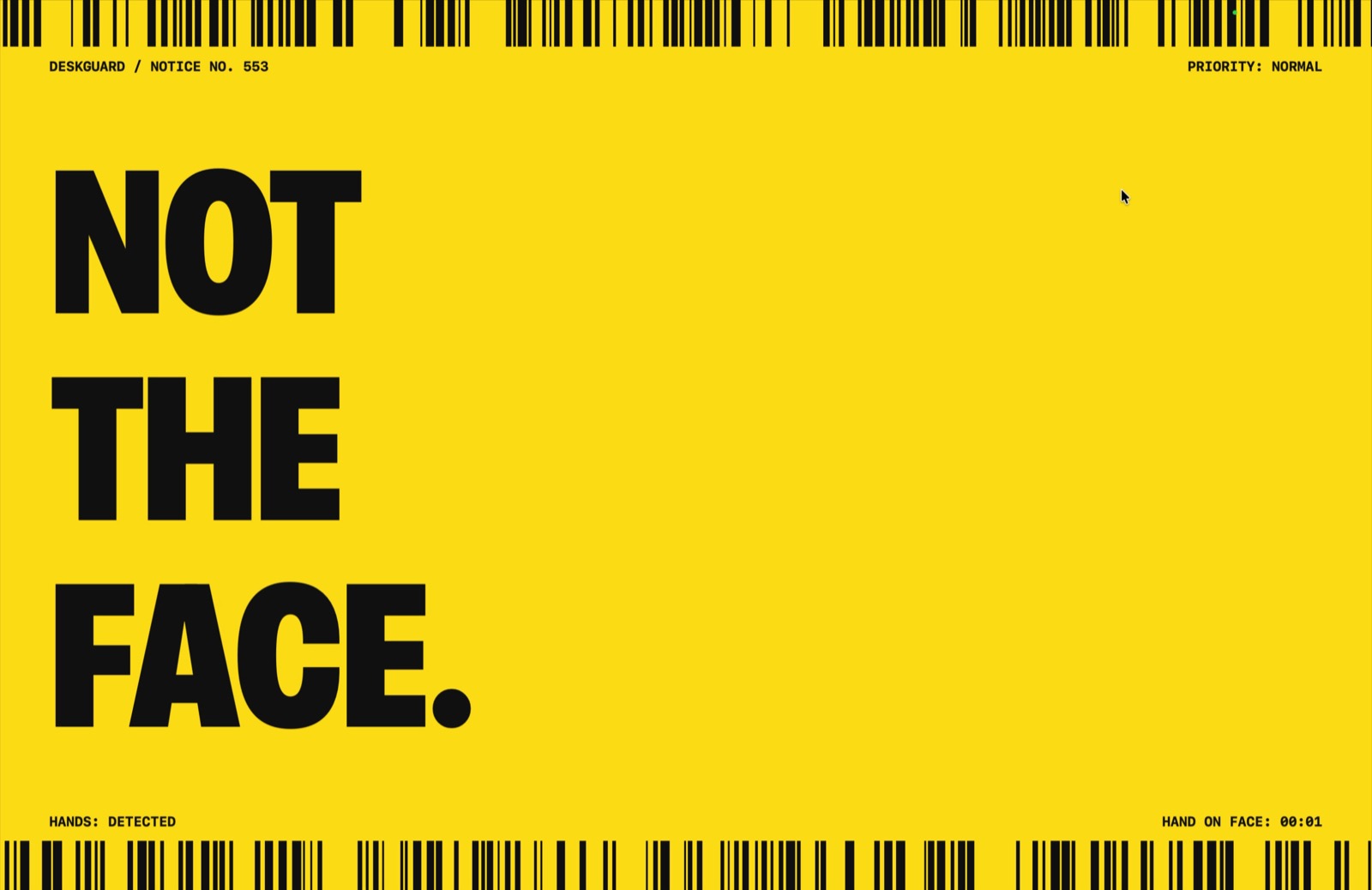
At a desk that can be as simple as a sticky note on the edge of your monitor. Some people wear a bracelet that vibrates when their hand moves toward their head. I built a Mac app, DeskGuard, that uses the webcam to notice when my hand stays on my face and puts up an alert. The method matters less than having some kind of reminder you'll keep using.
Have something else to do with your hands
The second step of habit reversal training is a competing response: a small action that makes pulling physically impossible. You do it the moment you notice the urge and hold it for about a minute, or until the urge passes.
At a desk, you could make loose fists in your lap, press your palms flat on the desk, or put your hand back on the mouse and keep going. If you're on calls a lot, choose one nobody will notice. What matters most is doing the same one every time, so it slowly becomes the new automatic thing.
Make it harder to pull
Therapists call this stimulus control. The idea is to add small barriers so you get a few extra seconds to notice.
For the scalp, a hat or headband helps. For brows, lashes or a beard, a bandage or finger cot on your thumb and index finger makes it hard to grab a single hair. Some people wear thin cotton gloves for long reading sessions. Keep tweezers out of your desk drawer. A little conditioner or beard oil also helps, because it makes hair slippery and less satisfying to feel for.
Keep your hands busy
A lot of pulling is about sensation: the texture of the hair, the feeling as it comes out. So it helps to keep something within reach that gives your fingers a similar kind of input. Putty, a spinner ring, a textured stone or a strip of Velcro stuck under the desk all work. Keep it on the side you pull with.
Small changes to your setup
- Turn off self-view on Zoom, Meet and Teams. Watching your own face on a call is an open invitation to inspect it.
- If you tend to rest your head on your hand, raise your monitor so you're not leaning in.
- Get up every 30 to 45 minutes, even just to refill your water. Long stretches of sitting still are where automatic pulling does the most damage.
- Keep mirrors out of view of where you work.
When to get help
Hair pulling isn't a willpower problem, and there's nothing to be ashamed of. If it's causing hair loss or distress, or taking up a lot of your time, a therapist who knows habit reversal training or the ComB model can do far more than any article. The TLC Foundation for BFRBs has a directory of specialists and runs support groups, many of them online.
Expect slips, and go easy on yourself when they happen. I find it more useful to look at how long I went between pulls than to count the pulls themselves.
Common questions
Why do I pull more when I'm concentrating?
When you're focused or bored, your hands are idle while your attention is somewhere else. That's when automatic pulling happens. A lot of people also pull to cope with stress, or with how dull a long task is.
What's a competing response?
Something you do with your hands that makes pulling impossible, like making loose fists or pressing your palms on the desk. You hold it for about a minute, or until the urge fades.
Can an app help with trichotillomania?
An app can help you notice, which is the first step of habit reversal training. It isn't a treatment on its own. It works best combined with the other things here, or with a therapist who specializes in this.
Should I see a therapist?
If pulling is causing distress or hair loss, or taking up a lot of your time, yes. Look for someone with experience in habit reversal training or the ComB model.
About me. I'm Harrison, and I make DeskGuard. I built it because I wanted something to tap me on the shoulder while I work. It watches the spots you choose and alerts you when your hand stays there. Everything runs on your Mac, and you can try it free for 7 days on the Mac App Store.
This is general information from my own experience and from habit reversal training resources. It isn't medical advice, and DeskGuard isn't a medical device or treatment.